Save Indigenous History: A Children's Activity Book Yakama Nation Collaboration
Save Indigenous History - Yakama Nation Collaboration activity book features original art from Indigenous artists and teaches kids in grades 3–6 about archaeology and how to visit cultural sites with respect.

Dr. Russell Kiáux Jim and Dr. Virginia Tuxámshish Beavert
Did you find us via QR code in the children's activity book?
This page is a QR code interactive page affiliated with the Save Indigenous History: A Children's Activity Book - Yakama Nation Collaboration. Read the full biographies of these two Yakama Nation leaders below and to learn even more about their lives and their legacy than what you can read in the book.
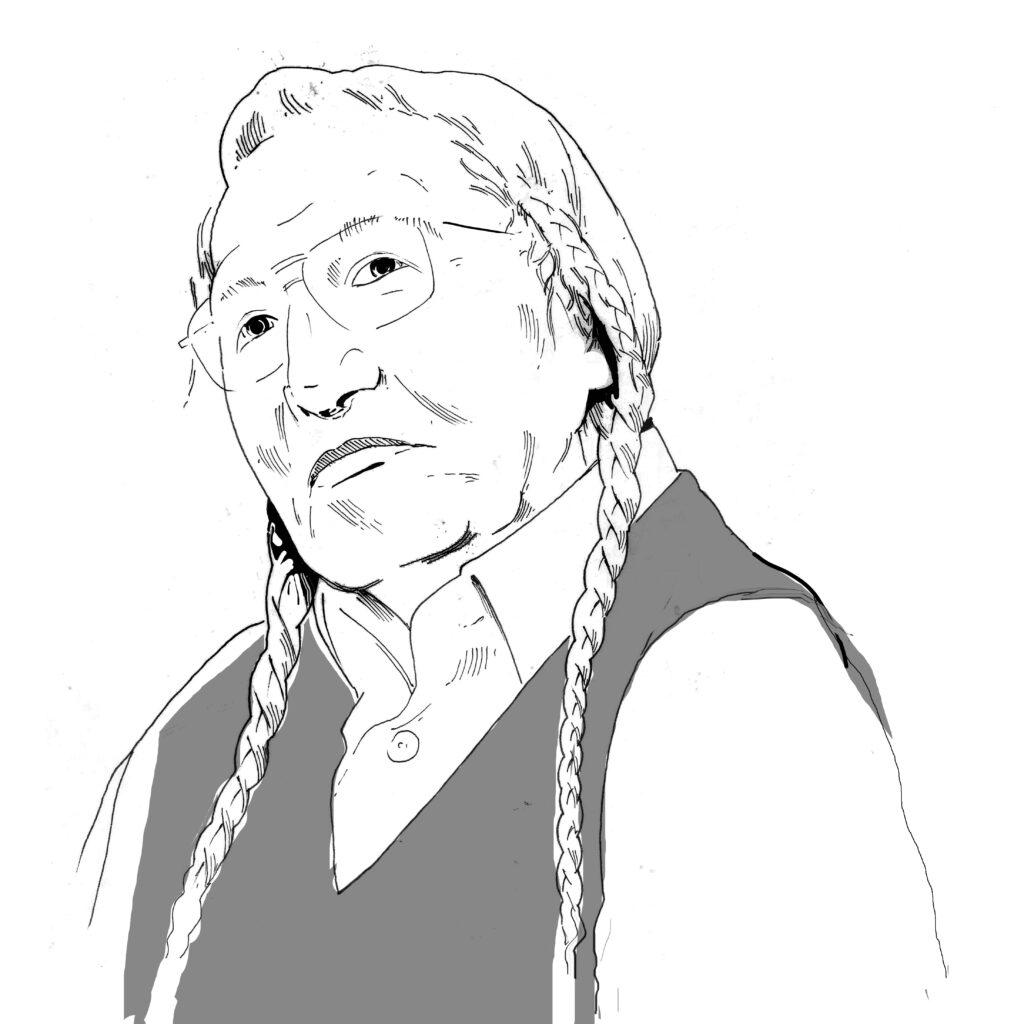
Image Credit: Eric Carlson
Dr. Russell Kiáux Jim
November 26, 1935 – April 7, 2018
Growing Up
He grew up in the Dry Creek area, raised by his aunts and elders. He loved riding horses and became a great horseman.
Family Life
He was married to Bobbie Jim for 45 years. They lived in Medicine Valley and raised two sons and six daughters. He also had 27 grandchildren and 28 great-grandchildren (and counting!).
Work
He worked for the Bureau of Indian Affairs in Forestry and later helped lead the Yakama Nation Tribal Council. He started the Yakama Nation Environmental Restoration and Waste Management Program to protect the land and environment.
Leadership
He was a respected religious leader and an expert in traditional knowledge. He spoke around the world about Environmental Science, Climate Change, Food Sovereignty, and Nuclear Justice. His work under the Yakama Treaty of 1855 protects Yakama tribal members now and into the future. He was involved with a number of organizations, boards, and councils including:
- Hanford Advisory Board
- Hanford Natural Resources Trustee Council
- State and Tribal Working Group
- DOE-Environmental Management Site-Specific Advisory Board
- Center for World Indigenous Studies
- Affiliated Tribes of Northwest Indians
- Hanford Challenge
- Heart of America Northwest
- Columbia RiverKeeper
- National Congress of American Indians
- Volpentest HAMMER Federal Training Center (HAMMER)
- Atomic Heritage Foundation
Honors
In 2017, he received an Honorary Doctorate from Heritage University for his deep knowledge of Yakama culture, nature, and the protection of the Yakama Nation Treaty of 1855. The university also created a scholarship in his name.
Legacy
His hard work, teachings, and leadership continue to inspire people today!
Question
Why do you think it's important to protect the land and environment like Dr. Jim did? Write your answer down and share with a friend.
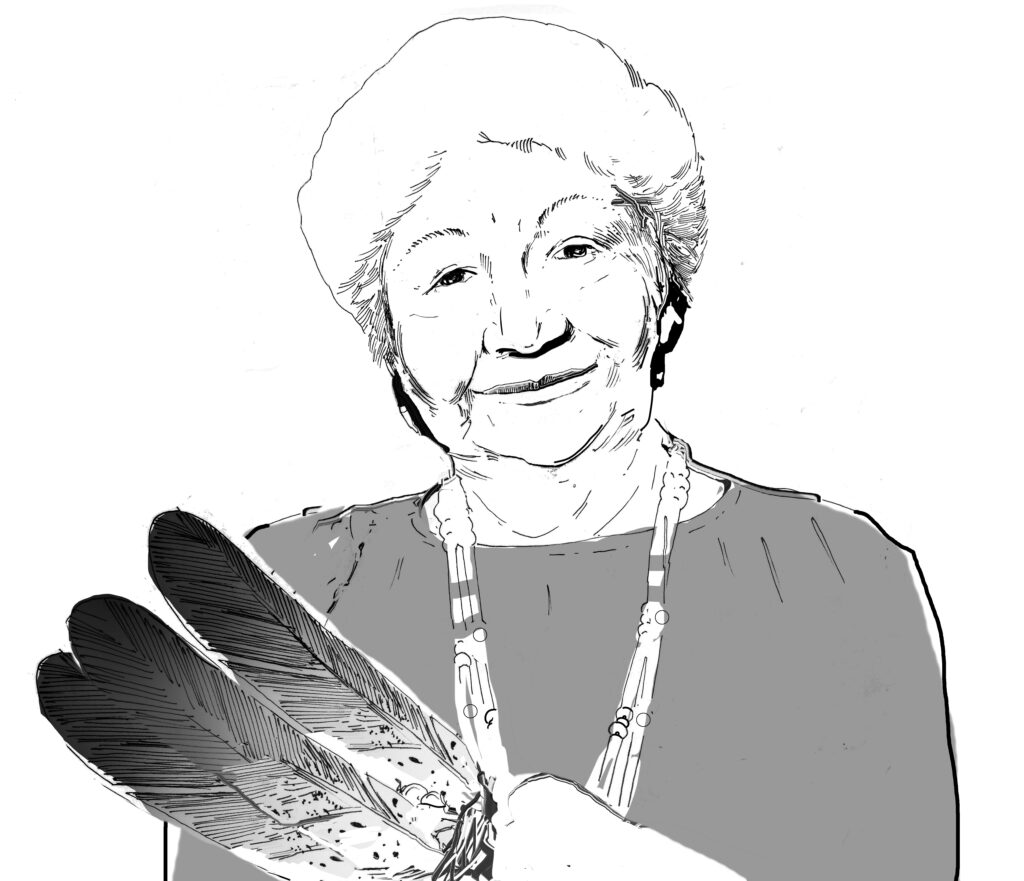
Image Credit: Eric Carlson.
Dr. Virginia Tuxámshish Beavert, PhD
November 30, 1921 – February 8, 2024
Growing Up
Dr. Beavert was born in the Blue Mountains. When she was just 12 years old, she helped Melvin Jacobs and other linguists and anthropologists by working as an interpreter.
Military Service
During World War II, she served in the Women’s Army Corps for three years.
Leadership
She was the first woman elected to the Yakama Nation General Council.
Education
She earned a bachelor’s degree in 1986 from Central Washington University, a master’s in bilingual and bicultural education from the University of Arizona, and a doctorate in linguistics from the University of Oregon. When she earned her doctorate at the age of 90, she became the oldest person to receive a degree from the University of Oregon. She continued to teach the Sahaptin language until the age of 102!
Language Work
Dr. Beavert was a talented linguist who worked hard to preserve the Sahaptin language and its multiple dialects. At the University of Oregon, she founded the Northwest Indigenous Language Institute. With Bruce Rigsby and her parents, Ellen and Alex Saluskin, she created the first Sahaptin dictionary and alphabet.
Books
She wrote many books about Yakama culture and language, including:
- Yakima Language Practical Dictionary (1975)
- The Way it Was: Anakú Iwachá: Yakima Legends (first publication: 1975)
- A Song to the Creator: Weaving Arts of Native Women of the Plateau (first publication: 1996)
- The Gift of Knowledge / Ttnúwit Átawish Nchʼinchʼimamí: Reflections on Sahaptin Ways (1997)
- Anakú Iwachá : Yakama Legends and Stories (2000)
- Ichishkíin Sínwit Yakama: Yakima Sahaptin Dictionary (2009)
Legacy
Dr. Beavert’s passion for preserving and teaching the Sahaptin language continues to inspire people today!
Question
Why might it be important to teach Sahaptin/Ichishkíin like Dr. Beavert did? Write your answer down and share with a friend.
Don't have a QR code reader? No worries!
Watch Videos: Ichishkíin Language Translations
Free Download Save Indigenous History: A Children's Activity Book - Yakama Nation Collaboration
Did you know this book is part of a series?
Download the first Save Indigenous History Children's Activity Book for free