
Archaeology in Action: Inspiring the Next Generation Through LEGO
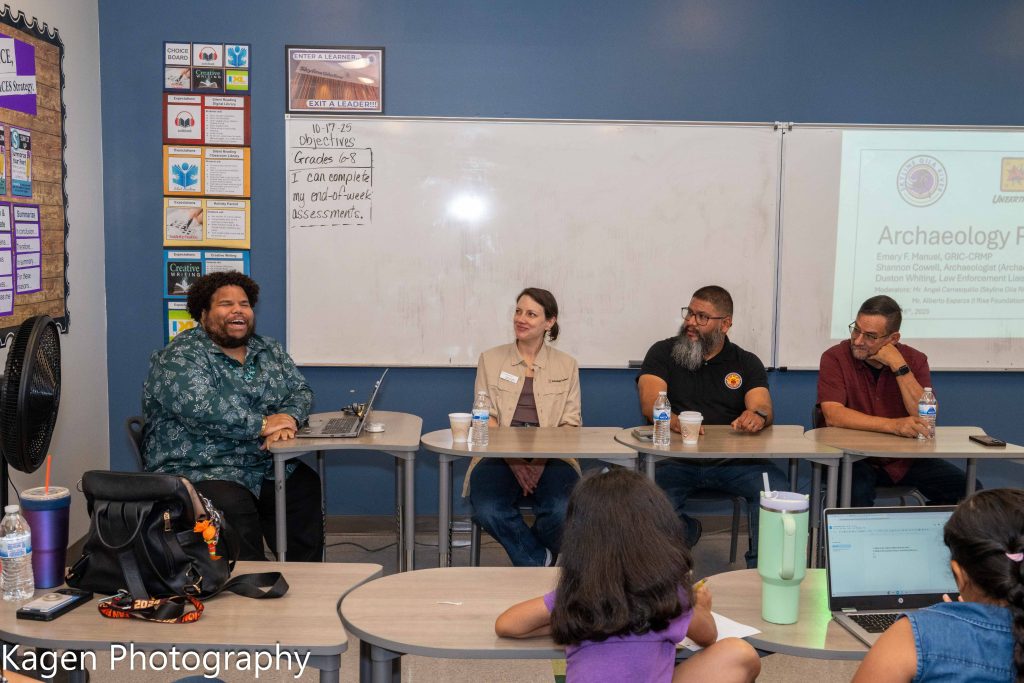
This year, the FIRST LEGO League introduced the UNEARTHED theme, challenging students to find solutions to real-world problems in archaeology. At Save History, we were eager to support several schools in exploring current issues in archaeology, including Skyline Gila River School here in Arizona and schools as far-flung as Illinois, Iowa, New York, Oklahoma, Oregon, Wisconsin, and Washington. Over multiple sessions and emails, our team engaged with students, teachers, and parents who posed thoughtful questions about archaeology, technology, site protection, and other related topics.
What is FIRST LEGO League?
FIRST LEGO League is an international program that introduces children aged 4–16 to science, technology, engineering, and math (STEM) through hands-on learning. Participants engage in real-world problem-solving experiences using LEGOs to envision a better future together. The 2025–2026 season focuses on archaeology, so teams are tasked with identifying a problem faced by archaeologists and proposing a solution through their Innovation Project.
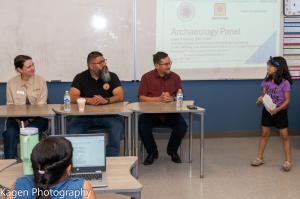
Listening carefully to a First LEGO League student.
Our Panel at Skyline Gila River School
Skyline Gila River is a 5th-12th-grade non-profit, tuition-free, open-enrollment public charter school that serves Native American students from the Gila River Indian Community. With LEGO League groups invited from Skyline Gila River School and neighboring schools in Chandler, Arizona, we had the opportunity to participate in a panel discussion, engaging students, teachers, and parents for an energetic 2.5-hour session filled with questions. The students were actively engaged and curious, asking about a wide range of topics, including the methods archaeologists use to uncover and interpret artifacts, how sites are located, and how decisions are made about where to dig.
Many discussions focused on the use of technology in archaeology, from drones and digital mapping tools to ground-penetrating radar and other methods for research and site protection. Students were also interested in how archaeological sites are preserved and protected from looting or damage, as well as the most notable or distinctive sites in the field. Students asked questions about what the biggest site we’ve worked on is or the oldest artifact we’ve found. Ethical issues arose as well, including why artifact collecting can be harmful, why museums are repatriating Ancestors and their belongings back to Native American Tribes, and how communities can actively care for and protect their heritage.
It was inspiring to see their excitement, and we appreciated how engaged they were throughout the session. A special thanks to Alberto Esparza, who invited us and organized the event, and Angel (AC) Carrasquillo, who kept the panel running smoothly. I’m also grateful to my colleagues, Dusty Whiting and Emery Manuel, for helping make this discussion engaging and informative. Thanks also extend to Anastasia Walhovd and Skylar Begay for helping answer virtual questions and preparing materials for the classes behind the scenes.
Reflections from Staff
Shannon: Events like this remind me how curious and thoughtful the next generation is. It also inspires me to think about how I can improve my communication and teaching skills to make complex topics accessible. I look forward to future events and outreach opportunities, and hope to inspire students to consider archaeology and heritage preservation as viable careers.
Dusty: I enjoyed the variety of ages and support from the parents and staff on a Saturday. I noted the kids formulating their questions in a variety of ways, from small spiral notebooks, to smart phones and iPads – but, they were THINKING AND EXPRESSING THEMSELVES! We saw one team transmogrify right before our eyes into criminal investigators who were bent on capturing the grave robbers!
Anastasia: Many of us archaeologists were curious young kids when we first learned about archaeology and it’s great to be part of the effort to plant that seed for the next generation. Supporting educational opportunities like this lights the spark of imagination in students. That spark is the key to ensure that archaeology and heritage preservation continue to draw young, talented minds in the future.
Get Involved
Teachers and students interested in LEGO League assistance or other educational events with the Save History team can reach out to us via our website or social media. We are committed to connecting with young learners and inspiring curiosity about archaeology and cultural heritage!
By Shannon Cowell with Dusty Whiting, Emery Manuel, Anastasia Walhovd, and Skylar Begay