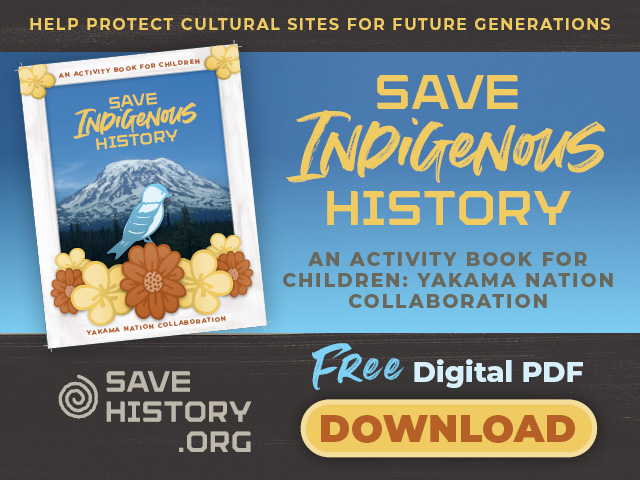
Celebrating the Launch of the Yakama Nation Activity Book!
SaveHistory.org, our collaborators, including the Yakama Nation are proud to present the latest edition of the children’s activity book: Save Indigenous History – Yakama Nation Collaboration.
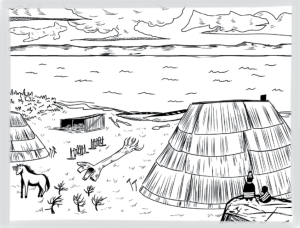
Tule Longhouses. Art by Lee Sekaquaptewa.
About the Book
Protecting cultural heritage starts with education. The Save Indigenous History activity books give children and families meaningful ways to learn about archaeological sites and the importance of visiting them with respect, fostering cultural stewardship from an early age.
The Yakama Nation version is a particularly welcome addition to this series. It infuses the book with the Ichishkíin language and Yakama traditions, landscapes, and values. By rooting the material in Yakama-specific stories and places, it moves beyond generic educational efforts and upholds cultural identity and sovereignty.
This project began in fall 2024 and has been a team effort with partners from the Yakama Nation’s Environmental Restoration/Waste Management Program, the Yakama Nation’s Ichishkíin Sɨ́nwit Language Program, Columbia Riverkeeper, our contributing artists, and SaveHistory.org.
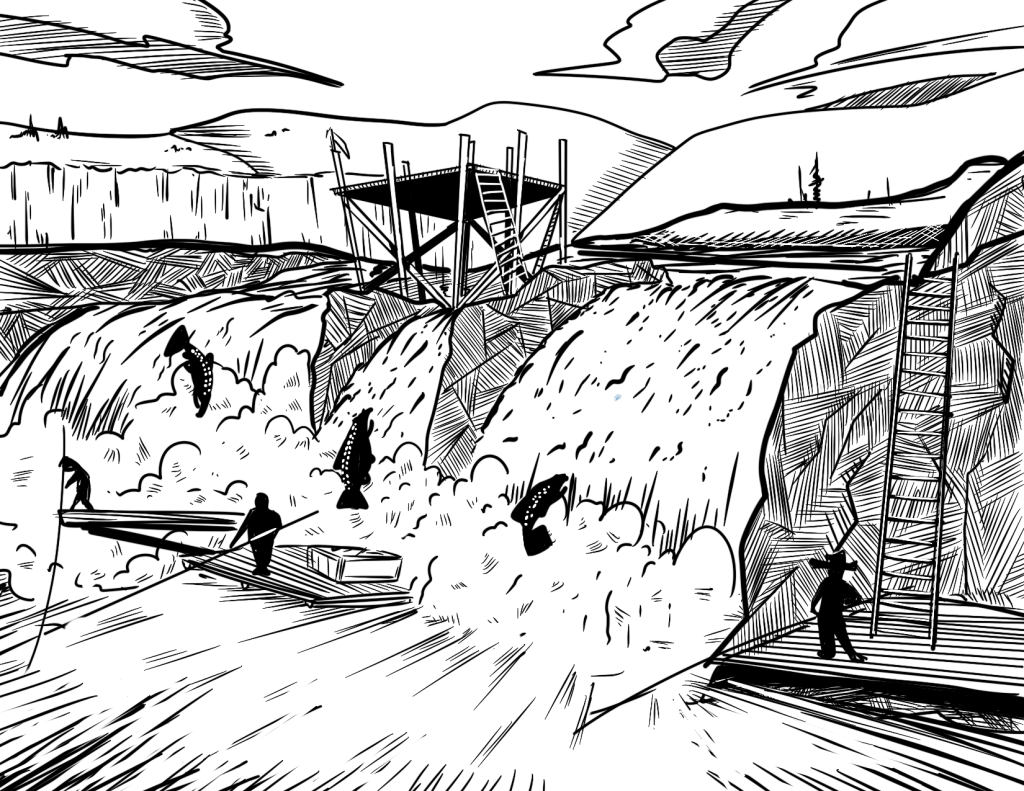
Through a collaborative process, the team shaped the activity book to reflect Yakama culture and values. Artwork suggestions were made to honor past Elders whose life’s work strengthened the community, creating tribute pages meant to inspire pride. The Ichishkíin language is woven throughout the book alongside Yakama cultural and archaeological teachings, with QR codes linking to an Ichishkíin pronunciation video.
The activities connect children with cultural landscapes through legends, puzzles about food gathering, and a pledge to respect archaeological sites. Featuring a photo of Pátu on the cover and a word search with the names of Yakama Nation tribes and bands, the book stands as a tribute to past, present, and future generations, encouraging stewardship of ancestral lands.
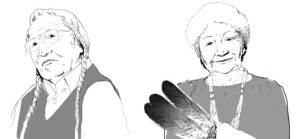
Portraits of Dr. Russell Kiáux Jim (left) and Dr. Virginia Tuxámshish Beavert (right). Art by Eric Carlson.
The hardworking artists who contributed to the creation of the book are:
● Brooke Capetillo (Yakama Nation [Kamilthpah] and Latina) @toadstoolbabeart
● Morgan Gaines (Quuich of The Confederated Tribes of Coos, Lower Umpqua, & Siuslaw Indians) www.n8vmojo.com
● Jack George (Yakama Nation) www.jackama.com
● Lorelei Kruger (Yakama Nation) @luckyarrowcreations
● Lee “Bone” Sekaquaptewa (Yakama, Diné/Navajo, Hopi – “Yakanavapi”) www.artofanongenius.com
● Kayla Shaggy (Diné and Anishinaabe) kaylashaggy.gallery
● Eric Carlson www.escillustration.com
How it Started
Trina Sherwood (Cultural Specialist for the Yakama Nation’s Environmental Restoration and Waste Management Program) and SaveHistory.org’s Anastasia Walhovd happened to be sitting next to each other at the National Association of Tribal Historic Preservation Officers (NATHPO) Annual Conference in Baraboo, Wisconsin in August 2024. They struck up a conversation when Anastasia gave Trina a copy of the original Save Indigenous History Children’s Activity Book, and they exchanged business cards. A few weeks later, they met via Zoom calls to plan a Columbia Plateau-focused version of the Children’s Activity Book. One year later, the Save Indigenous History: A Children’s Activity Book – Yakama Nation Collaboration was launched during the 2025 NATHPO Conference.
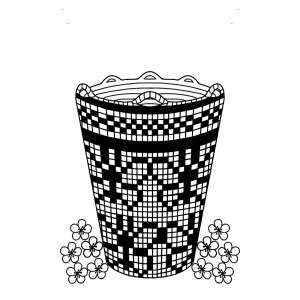
A Klickitat basket with butterfly imagery. Art by Brooke Capetillo.
Insights from Artists and Collaborators
We asked our artists and collaborators to share their insights about the creation of the Save Indigenous History – Yakama Nation Collaboration children’s activity book.
What inspired you to work on this project?
“Our youth—next generations of stewards of the ancestral lands of the Yakama Nation & our two elders we honored are who inspired me.” – Trina Sherwood, Yakama Nation Environmental Restoration and Waste Management Program
“Our elders who continue to see the world through the perspective of our language and culture, and share it with others.” – Keegan Livermore, Yakama Nation Language Program
“The fact that Save history made a space specifically for Yakama and PNW Tribal artwork to be shared with everyone made we want to be a part of this project.” – Lorelei Kruger, Artist
“I saw a posting online calling for artists to submit their interest in working on the children’s activity book and I jumped at the opportunity. My passion lives in my art and my ability to share it with others. It was an honor to be chosen to work along side so many talented artists from the Yakama Nation. I hope my work can stand along side theirs in bringing knowledge to youth about protecting our ancestral sites. By protecting our past, we preserve our future and show the world that we are still here, thriving indigenous communities living our culture in the present.” – Morgan Gaines, Artist
What did you enjoy about creating art for the book? What was challenging about creating art for the book?
“I enjoyed working with the artists to create pages that speak volumes for intergenerational knowledge and sacred spaces lost to “progress” and those we can still protect.” – Trina Sherwood, Yakama Nation Environmental Restoration and Waste Management Program
“I enjoyed combining the activity aspect with the artwork. The most difficult part for me was drawing the landscape.” – Lorelei Kruger, Artist
“I’m passionate about creating art and exploring new mediums. My current focus is on digital art and design and I felt that this project aligned perfectly with my current medium of focus. The subject of my art this last year has also mainly been inspired by flora and fauna, so I was very excited to be assigned the pages relating to animals and their tracks and habitat. The fit was truly serendipitous.” – Morgan Gaines, Artist
What elements of your culture did you include in your artwork?
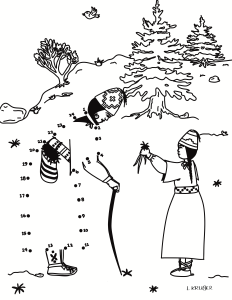
A connect-the-dots featuring a kápɨn (root digging tool). Art by Lorelei Kruger.
“I wanted familiar cultural landscapes, animals, food-gathering, and incorporating our language was extremely important.” – Trina Sherwood, Yakama Nation Environmental Restoration and Waste Management Program
“The work that I contributed depicts our fishing and gathering practices.” – Lorelei Kruger, Artist
“I haven’t drawn a wa’paas [basket] before, but did my best to make it look woven. I wanted to make it apparent how designs are authentic and don’t need to be completely even like a factory-made item. For my maze piece, I wanted the spilyay [coyote] to be the main focus, the one who brings the fire out of the cave and helps the animals of the forest just like in the story.” – Brooke Capetillo, Artist
“When assigned my pages for the artwork in the activity book I was thrilled to see that the animals that were important for the Yakama Nation to capture in this project are similarly important to my own Nation of the Confederated Tribes of Coos, Lower Umpqua, & Siuslaw Indians (CTCLUSI). The People are how we refer to our animal relatives. The Deer, Porcupine, Eagle, Owl and all our relatives provide us lessons about the world in which we live. Following their teachings allow us to truly thrive. The gifts they provide nourish our minds, bodies, and spirits and we honor them, hands up in thanks. hiisa” – Morgan Gaines, Artist
What do you hope the younger generations will learn from this book?
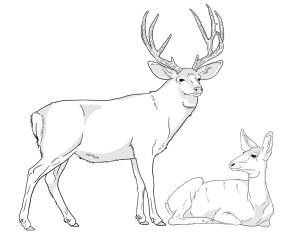
Draw a thriving habitat for the mule deer. Art by Morgan Gaines.
“How to identify with people, places, objects of cultural significance to instill their cultural identity and connectivity to cultural landscapes.” – Trina Sherwood, Yakama Nation Environmental Restoration and Waste Management Program
“That our language is alive and connected to our homelands, and still has a place in our community and way of life.” – Keegan Livermore, Yakama Nation Language Program
“I hope that they realize how important it is to practice our traditions and protect our resources.” – Lorelei Kruger, Artist
“I hope they are able to take away and absorb the beauty of Pacific Northwest Indigenous culture. It’s good to know your roots, and or learn about the culture of the land that was [barely taught or not taught in schools at all in past generations]. Today, we have the choice to keep educating ourselves and I think that is truly a gift we need to value.” – Brooke Capetillo, Artist
“I hope the younger generations learn to love their culture and history through learning about these important sites and how to protect them. I hope the lessons provided in these pages give them a sense of honor about the people and places they come from, and that they are inspired to preserve their history for the future generations so that we may all experience the strength of our People through the teaching they leave behind with the artifacts from these spaces.” – Morgan Gaines, Artist
“This activity book connects cultural teachings with STEM to inspire confidence, curiosity, and belonging in younger generations. It affirms that Indigenous knowledge systems are vital contributions to science, engineering, technology and math, and it encourages learners to view STEM through the lens of identity, land, and community. I believe the message to our younger generations is – You belong in STEM fields and that cultural perspectives enrich them. Your ideas matter and listen to the knowledge of Elders and ancestors – it’s real science too.” – Samantha Redheart, Yakama Nation Environmental Restoration and Waste Management Program
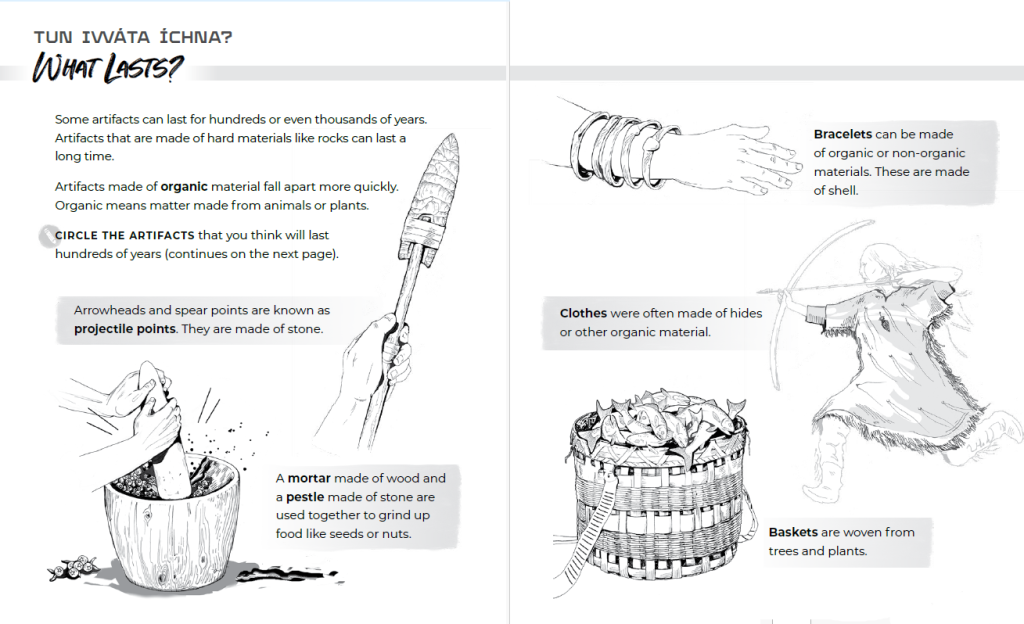
“What Lasts?” activity teaching archaeological concepts. Art by Eric Carlson.