
Safeguarding the Heart of P’osuwäegeh’ówîngeh: A Collaborative Effort to Protect the Pueblo of Pojoaque’s Sacred Places
By Fermin Lopez (Pueblo of Pojoaque, THPO), Michael Spears (MOS Research, LLC), and Sean O’Meara (MOS Research, LLC)
June 24, 2025
In the heart of the verdant northern Rio Grande Valley lies the Pueblo of Pojoaque, which is known in Tewa as P’osuwäegeh’ówîngeh, meaning “Water Drinking Village.” The Pueblo has a rich living cultural heritage tied to the traditions of their ancestors. On the Pueblo’s lands, large ancestral villages dating back over 1,000 years demonstrate the longevity and continuity of the community. At one of these ancestral villages, the Pueblo recently accomplished an important preservation project with support from the Bureau of Indian Affairs, Archaeology Southwest’s Save History & ARPA Assistance Initiative, and MOS Research, LLC.
For many years, a deeply significant ancestral Pueblo site on Pojoaque’s lands suffered from unwanted attention due to its archaeological significance, as well as its proximity to recreation areas and large roadways. The repeated intrusions created an ongoing threat to this place of living cultural and historical importance to the Pueblo of Pojoaque.
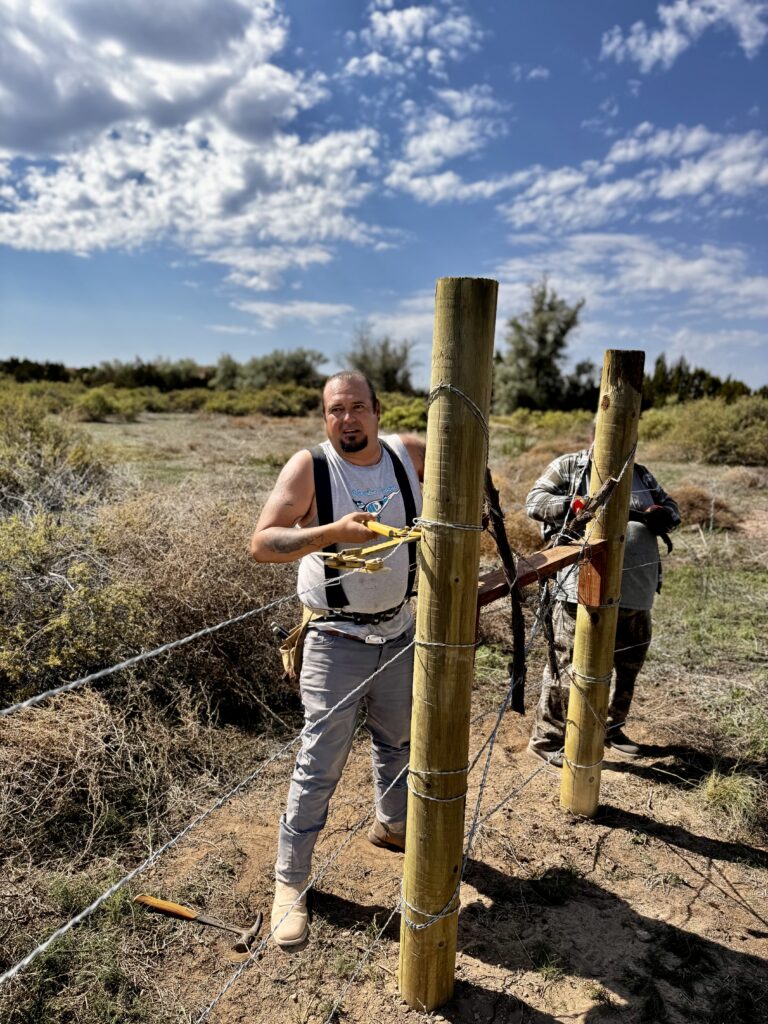
Fence crew lead, Angelo Walsh, stretching wire at a recently constructed H-brace. Photograph by Sean O’Meara, June 20, 2025.
Determined to take strong action, the Pueblo of Pojoaque’s Tribal Historic Preservation Office (THPO) initiated a fencing project with its collaborators to both protect the site and clearly define a culturally sensitive area on the Pueblo’s lands. This fencing effort represented a bold act of sovereignty after generations of disturbances to the site, with the Pueblo now taking full control over how this ancestral place is treated and protected.
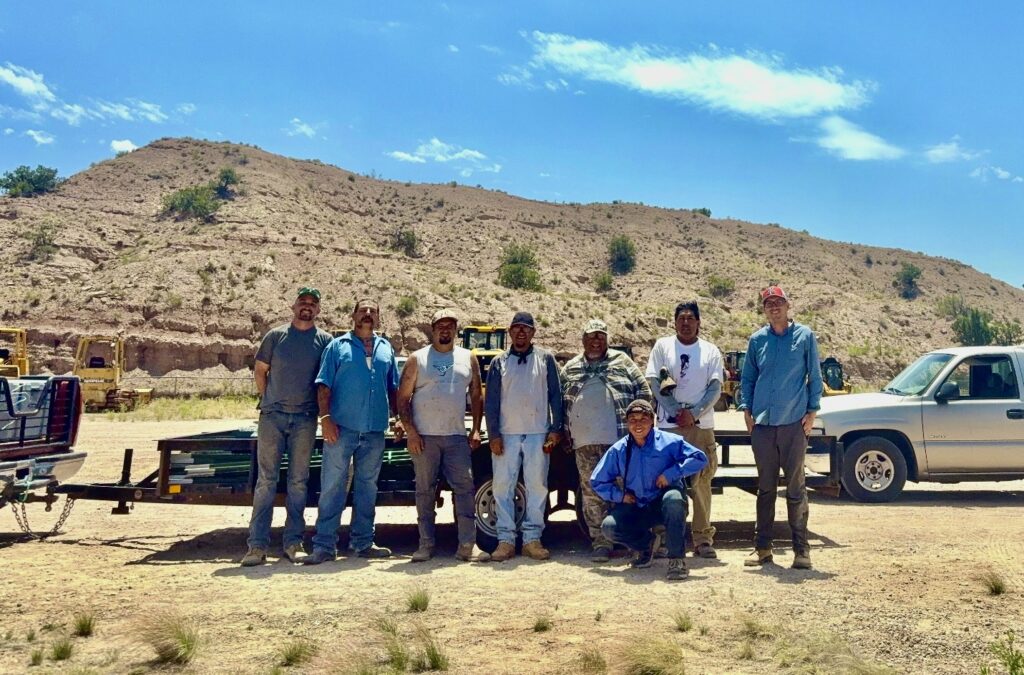
The fencing crew was led by Angelo Walsh of the Pueblo of Nambé. The work brought together dedicated team members from across the region, including Pueblo individuals from Pojoaque, Nambé, Cochiti, Santa Clara, San Ildefonso, and Ohkay Owingeh. Through their shared work and purpose, the crew not only built a robust protective fence for an ancestral Pueblo but also forged stronger ties across Pueblo communities.
The constructed fence was designed to both safeguard the site while respecting the surrounding cultural landscape, including its non-human inhabitants. For example, the Pueblo chose to use barbless wire to allow the safe passage of animals such as mule deer and elk through the fence, while still providing a strong barrier to discourage trespassers.
Now in place, the fence serves as both a physical barrier and a powerful message: these ancestral places remain central to the life and identity of the Pueblo of Pojoaque and will be protected for future generations. This project is a strong example of what The Save History movement is all about, Tribal communities taking proactive steps to end archaeological resource crimes on Tribal lands and educate the public about the deep importance of respecting these sacred places.
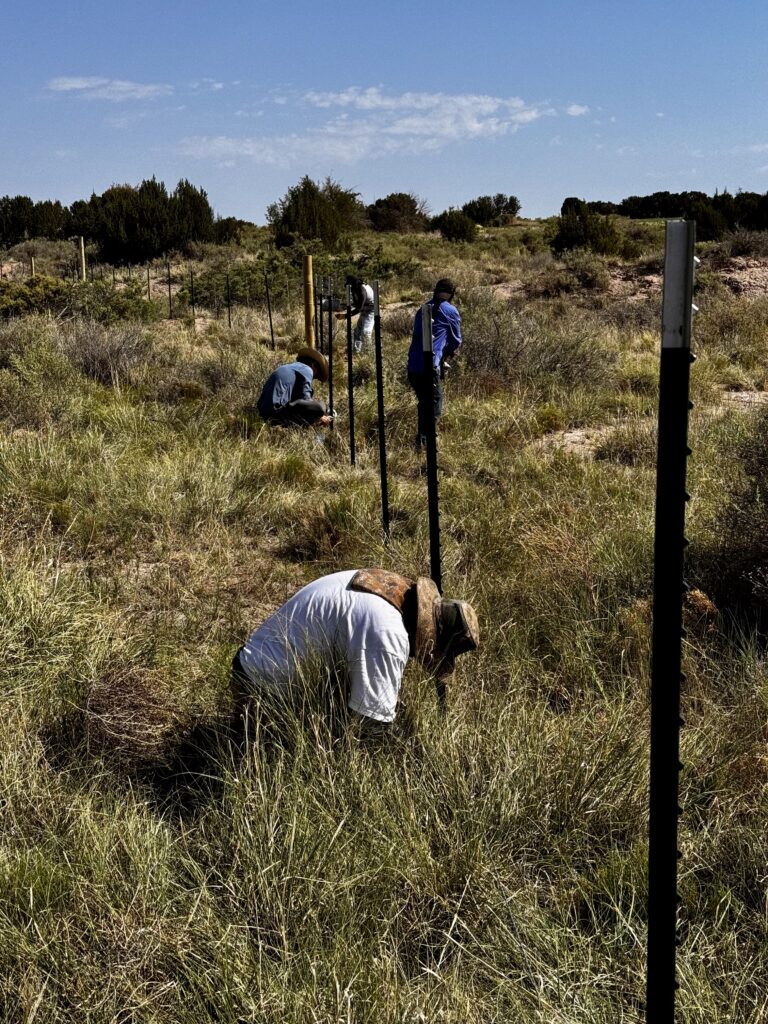
Fence crew members running and tying wire. Photograph by Sean O’Meara, June 20, 2025.